Waste Collection Services in the Indian Himalayan Region: Empowering Communities for a Cleaner Tomorrow
The Indian Himalayan Region (IHR), renowned for its breathtaking landscapes and rich biodiversity, faces a growing challenge: managing the increasing volumes of waste generated by residents and tourists. Effective waste collection service is crucial to preserving the ecological integrity of this sensitive region. While the difficult terrain and dispersed settlements pose logistical hurdles, innovative and community-centric approaches are proving to be effective in tackling the waste problem. Organizations like Waste Warriors Society are at the forefront of this change, implementing diverse waste collection service models tailored to the unique needs of different Himalayan communities. Let’s go through various modes of waste collection in Indian Himalayan Region.
On-Foot Waste Collection
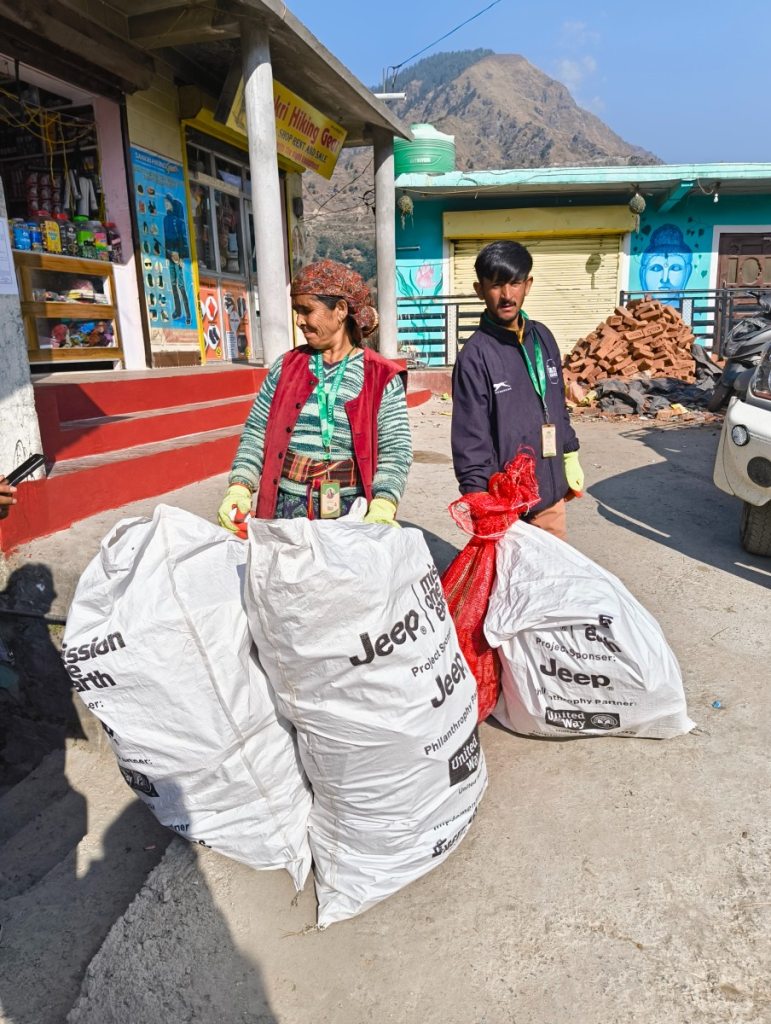
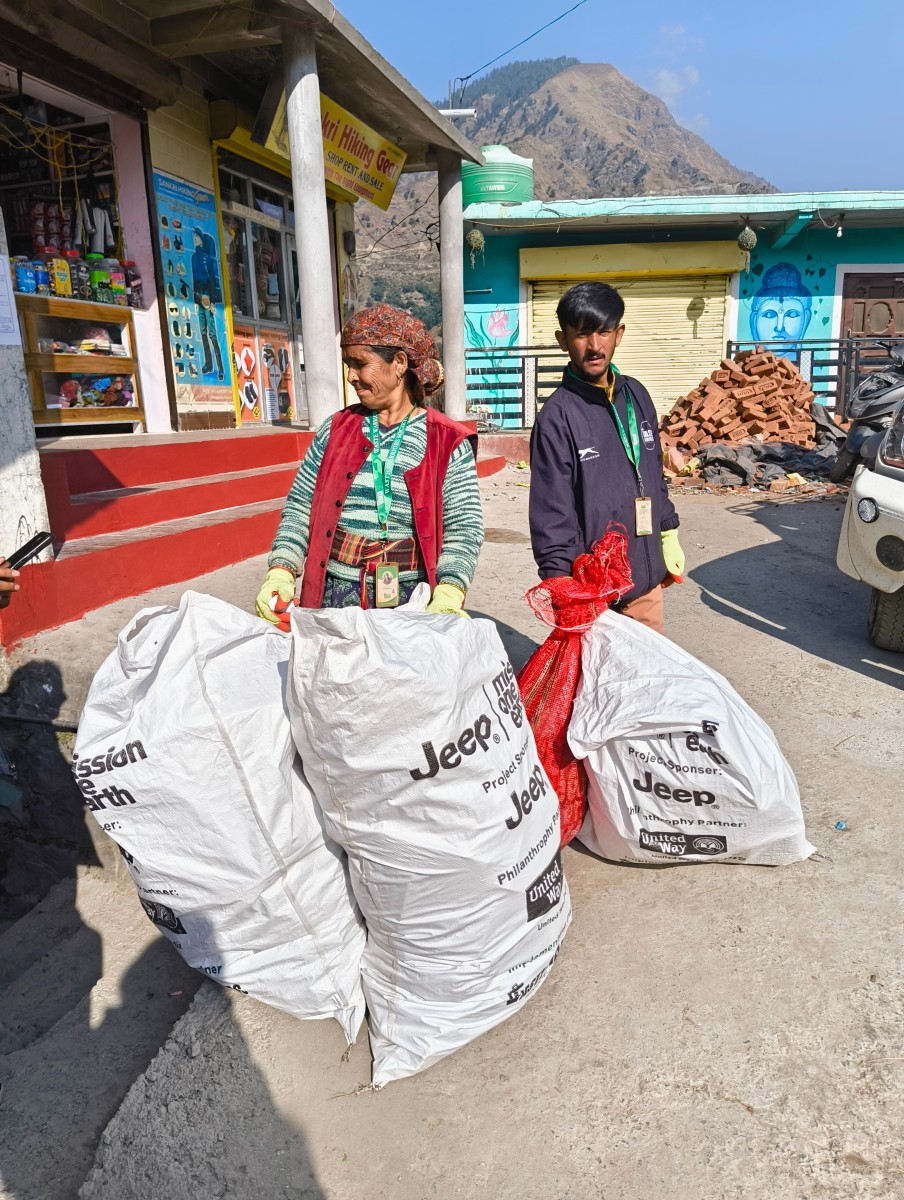
Greenworker in Sankri collecting waste from shops and households.
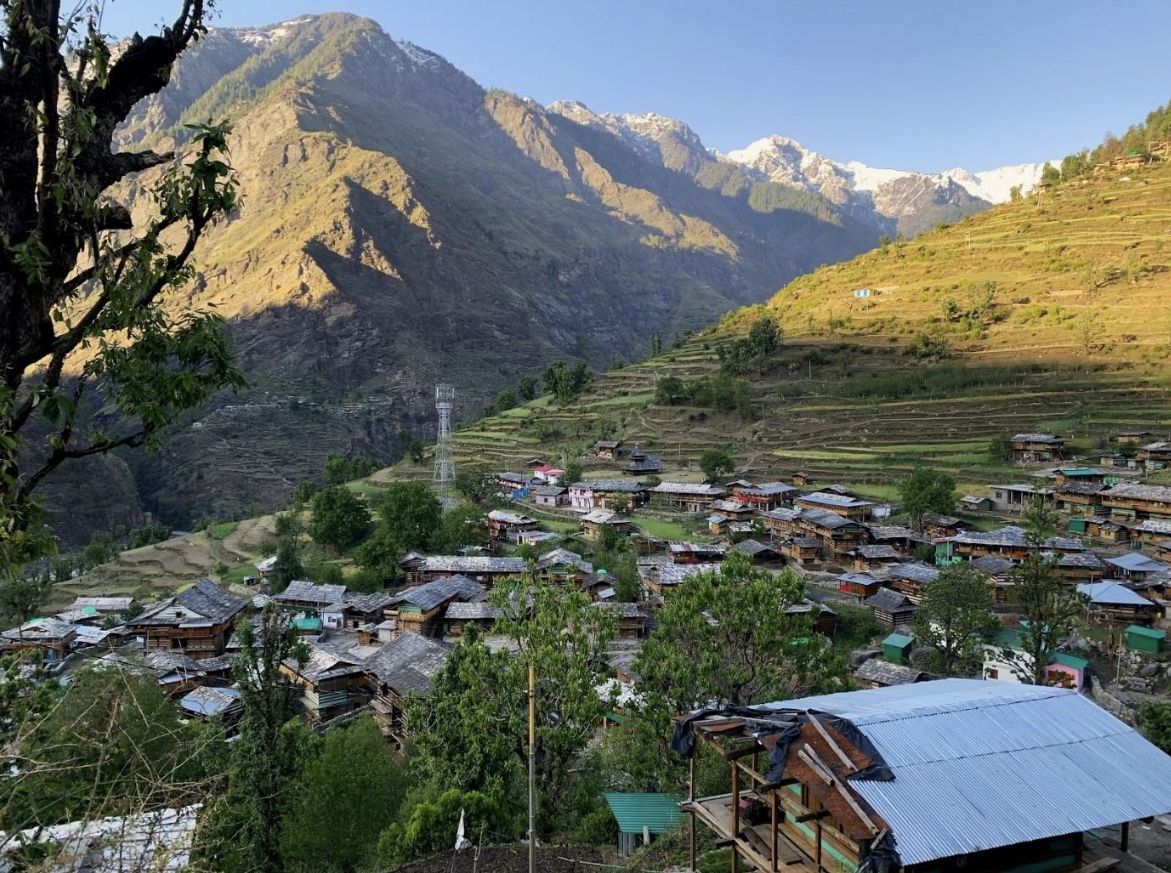
One of the fundamental challenges in the IHR is the varied topography. In areas like Uttarkashi, with its steep slopes and remote villages, traditional vehicle-based waste collection service is often impractical. Here, a door-to-door waste collection service model relying on dedicated waste workers who traverse the terrain on foot has been successfully implemented. These “foot soldiers” of waste management reach households in otherwise inaccessible areas, ensuring that dry waste is collected regularly and doesn’t end up polluting the environment. This labor-intensive yet vital waste collection service highlights the commitment to reaching every corner of the region. In the year 2024-2025, we have been able to divert 13.7 MT of waste from the landfill.
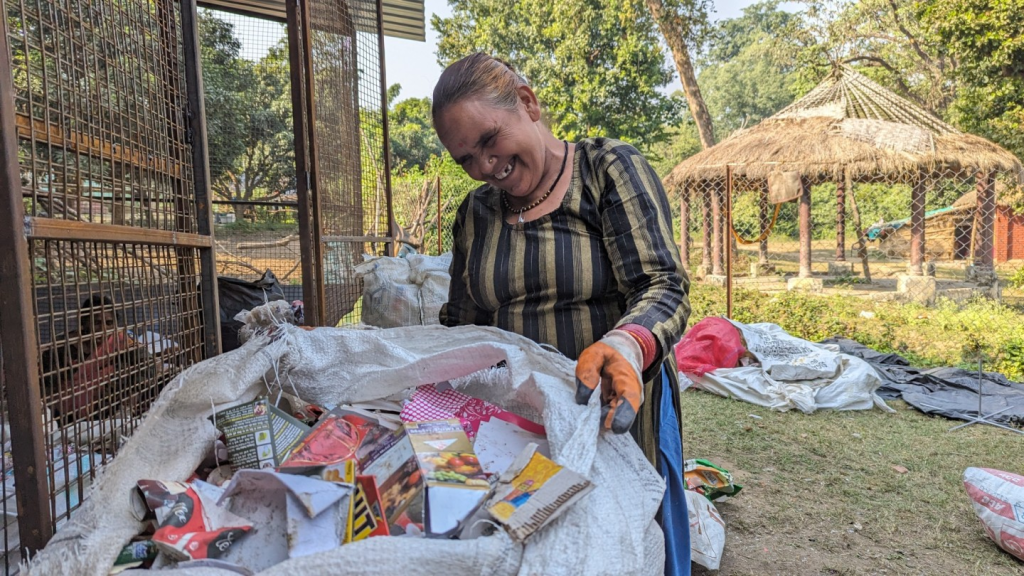
Paryavaran Sakhi preparing a sack of waste for further segregation.
Another example of a unique and empowering model championed by Waste Warriors is the “Paryavaran Sakhi” (Friend of the environment) initiative, successful in the Corbett region. This model trains local women to become environmental leaders responsible for managing waste within their communities. These Paryavaran Sakhis oversee door-to-door waste collection service, promote waste segregation at the household level, and conduct awareness campaigns. This not only ensures effective waste collection service but also provides dignified livelihoods for women and fosters a sense of ownership within the community. This community-led approach is vital for the long-term sustainability of waste collection service in the region. Read the detailed report on Paryavaran Sakhi Model here.
Collection in Dry Waste Storage Unit
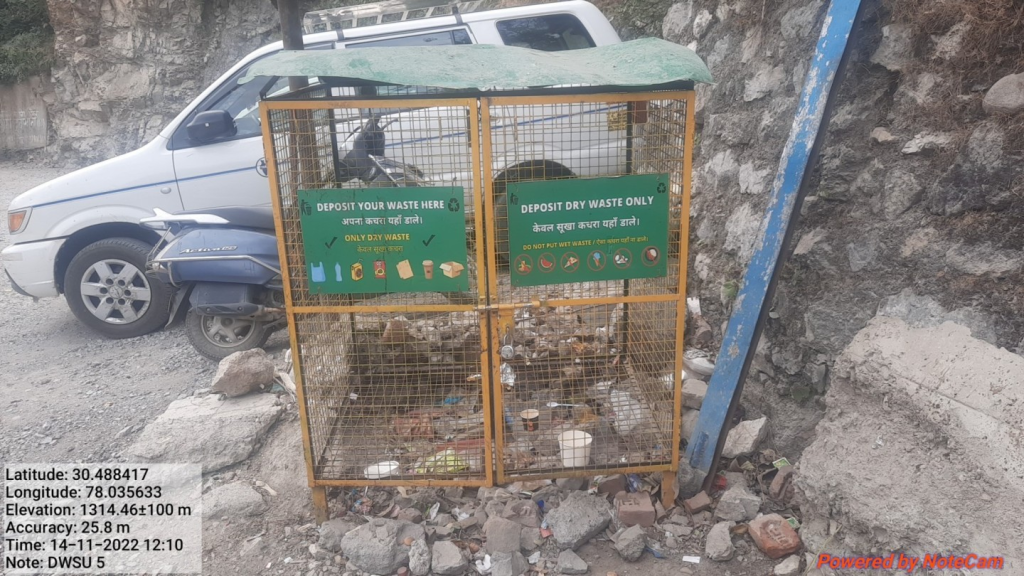
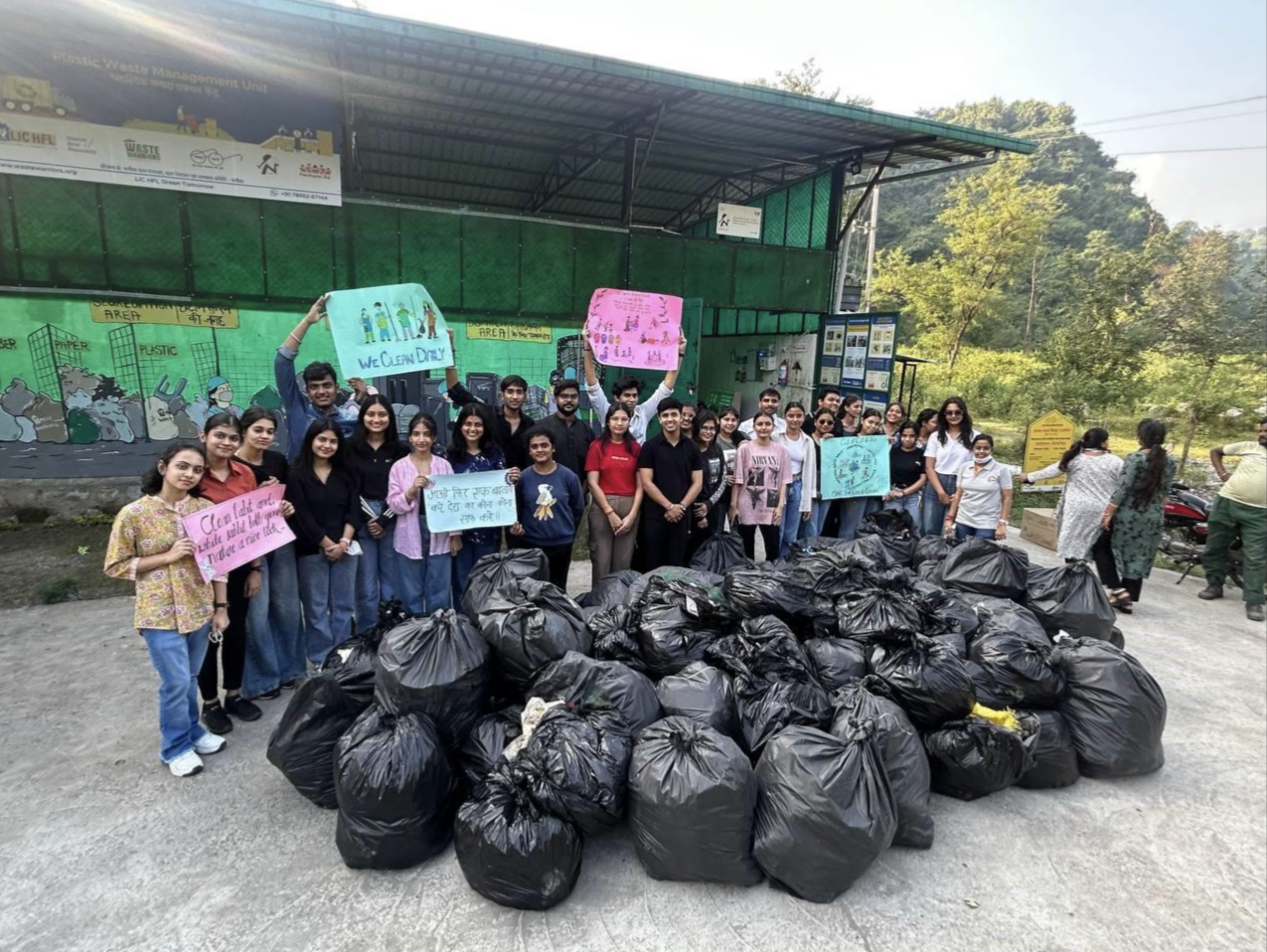
Dry waste storage unit near Kempty market area.
Recognizing the importance of dry waste management, Waste Warriors has established dry waste storage units in areas like the Kempty Fall region. These decentralised units serve as collection points where local residents and shopkeepers can bring their segregated dry waste. This initiative encourages community participation in the waste collection service and reduces the burden on centralized collection systems. The stored dry waste is then periodically transported for further processing and recycling. This model demonstrates a cost-effective way to manage recyclable waste in a geographically dispersed region.
The collected dry and wet waste is then channelled to Material Recovery Facilities (MRFs). Waste Warriors currently operates five such MRFs in Himachal and Uttarakhand combined, which act as crucial hubs in the waste collection service chain. At these facilities, the segregated waste undergoes further sorting, processing, and baling before being sent for recycling or responsible disposal. The MRFs play a vital role in maximizing resource recovery and minimizing the amount of waste that ends up in landfills, thereby strengthening the overall waste collection service and its environmental impact.
Collection through Vehicles
In more accessible areas, conventional vehicle-based waste collection service plays a significant role. Waste Warriors, for instance, utilizes vehicles to collect segregated waste from households and commercial establishments. This model allows for the collection of larger volumes of waste and its transportation to processing facilities. The efficiency of this waste collection service is enhanced through route optimisation and community awareness programs that encourage source segregation. For example, one of our Models in Ward 97 in Harrawala, Dehradun is doing efficiently well. Here we have onboarded 1800 households who receive waste collection service on every alternate day. The vehicle collects waste from every household which is segregated in three categories: dry, wet and hazardous. The waste is then sent to Material Recovery Facility in Harrawala for recycling. Apart from that, Waste Warriors, in collaboration with Nagar Nigam, runs Waste collection vehicles on several routes throughout the City. This vehicle only accepts dry waste. You can avail of this waste collection service in Dehradun at no cost. Check the availability of this service near Dehradun here +91 63976 81480
The objectives of Model Ward 97:
- To create a model ward where 100% household waste is segregated and sent for processing.
- To increase source segregation rates.
- To establish a Material Recovery Facility (MRF) in Harrawala to process waste.
- To inculcate better waste management practices in the local community.
Local Entrepreneur Model
To ensure the long-term sustainability and scalability of their efforts, Waste Warriors also promotes a local entrepreneur model for waste collection service. In this approach, the organisation provides initial support to local entrepreneurs by assisting with infrastructure setup (Such as setting up a Material Recovery Facility), asset procurement (such as bags, bins, gloves and vehicles), onboarding of households, and training of waste workers. Once the waste collection service is established and running efficiently, it is handed over to the local entrepreneur. This fosters local ownership, creates employment opportunities, and ensures the continuity of the waste collection service within the community. This model empowers local communities to manage their waste effectively and sustainably.
Conclusion
Looking towards the future, innovative solutions can further enhance waste collection service in the Indian Himalayan Region. For instance, exploring the potential of piggery for managing wet waste could offer a sustainable and economically viable solution. Pigs are known to efficiently consume organic waste, thereby reducing the volume of wet waste requiring disposal. This approach could be particularly beneficial in rural Himalayan communities where livestock rearing is already a common practice. While this model is not currently widespread, its potential for converting waste into a valuable resource warrants further exploration.
In conclusion, effective waste collection service in the Indian Himalayan Region requires a multi-faceted approach that considers the unique geographical challenges and empowers local communities. The endeavors of organizations like Waste Warriors Society, through their diverse models such as on-foot collection, vehicle collection, the Paryavaran Sakhi initiative, dry waste storage units, Material Recovery Facilities, and the local entrepreneur model, are paving the way for a cleaner and more sustainable future for the IHR. Continuous innovation and community participation remain key to tackling the growing waste challenge and preserving the pristine environment of the Himalayas.

Abhishek Bhatt
Assistant Manager, Communications