“Imagine a family picnic basket, it had something for everyone. It was a box full of memories, tastes, fragrances and stories”.
Our planet is like that picnic basket – it has something for everyone’s tastes and needs. It fulfills our necessities and also our desires. Like the desire you have to enjoy a cold ice cream after the afternoon picnic.
Now imagine an old bed sheet spread out on the ground, food items displayed, cutlery items reaching everyone’s hands, and after relishing the food, everything was packed again in the basket, leaving nothing behind. Sustainable tourism, if understood as a way of being, is very simple and kind.
But we wonder, are travel and tourism the same? People travel everyday and often very long distances traversing through colourful and often daunting Indian roads and packed public transport to reach their destinations. No matter, if it’s a chips packet left behind on your metro seat or thrown down a hill on your vacation, both are equally unsustainable. Travel is any journey made from one location to another for whatever reason, including going to work, travelling for job- related purposes, travelling for pleasure, or moving to a new place. Travel is a part of all tourism, yet not all travel is tourism. (Verma, 2015). Travel for pleasure, business, or amusement is referred to as tourism. Though tourism in the mountains offers pleasant scenery, not everything that meets the eye is a complete picture.
Tracing back the origin and history of the Sustainable Development, Centre for Agriculture and Biosciences International Archives in one of their paper quotes,
‘The debate over the concept of sustainable tourism is a phenomenon of the 1990s. However, its origins lie in the wider concept of sustainable development which has been with us for many centuries
By sustainable, we generally mean development which meets our needs today without compromising the ability of people in the future to meet their needs. The concept of sustainability clearly embraces the environment, people and eco- nomic systems’.
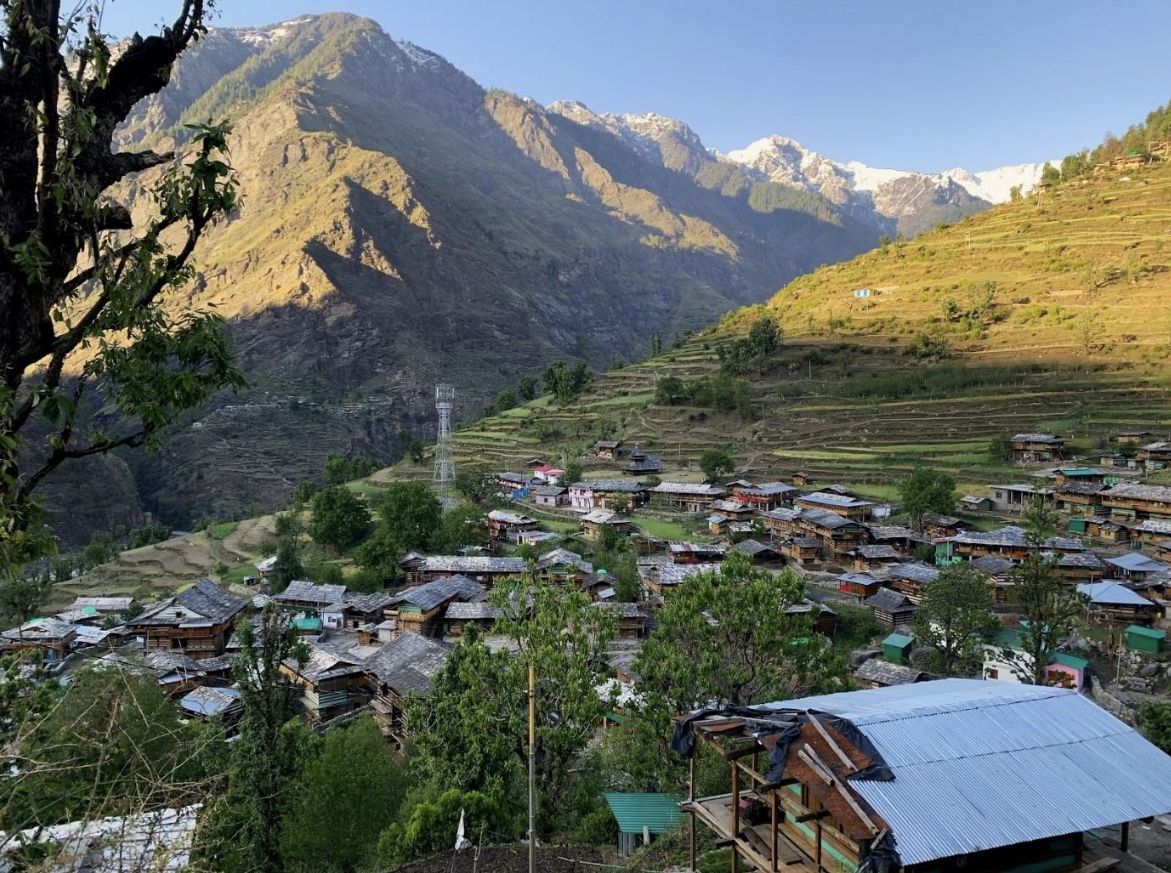
Sustainable management of the tourism in the mountains brings forth unique challenges which makes practice and development challenging, such as,
- Steep slopes, rocky terrain, and limited flat land make it difficult to establish landfills and waste treatment facilities. Waste disposal in such landscapes often results in harmful leachates contaminating water sources and soil.
- Popular tourist destinations like Manali, Shimla, Leh, and Bir Billing experience seasonal surges in waste generation. In peak tourist seasons, waste output often exceeds the local infrastructure’s capacity to manage it effectively.
- Many towns and villages in the Himalayan region are remote and difficult to access, especially during harsh winters or monsoon seasons. Transporting waste to central treatment facilities is logistically challenging and expensive.
- Waste collection, segregation, and recycling facilities are often underdeveloped or nonexistent in many Himalayan towns and villages. The high costs of transporting waste for treatment further exacerbate the problem.
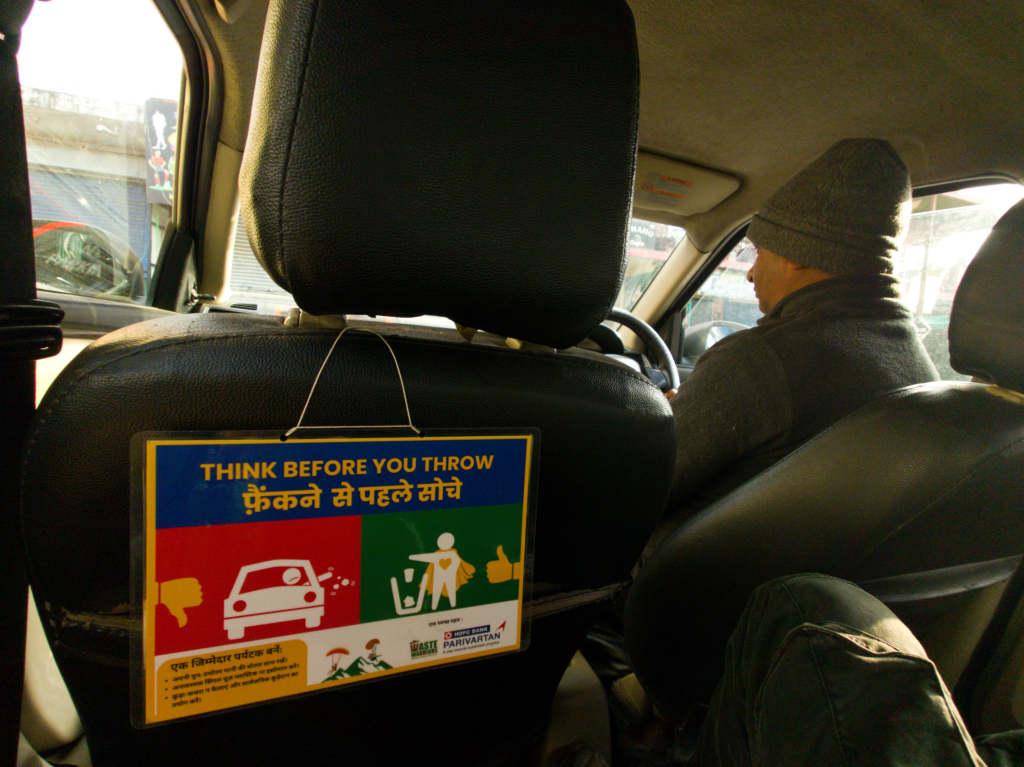
An awareness card on travelling responsibly in local taxi drivers’ cars in Bir Billing
The Swachh Yatra Campaign. It targeted taxi services in Bir Billing and Dharamshala aiming to transform taxi drivers into ambassadors for cleaner and greener spaces. This initiative stemmed from feedback indicating that much of the littering in the region was caused by
the transient population tourists visiting annually, particularly during the tourist season spanning half the year. During the last year itself, Himachal Pradesh saw record tourist footfall in 2024 with 83,000 foreigners, 1.80 crore domestic visitors. (Source: timesofindia)
As part of the campaign, placards promoting responsible waste management and segregation were distributed to taxis. One placard was displayed on the rearview mirror, and another was placed behind the driver’s seat. These placards sparked curiosity among
passengers, prompting drivers to explain their role in keeping areas clean. Drivers encouraged passengers to retain any dry waste during the journey instead of discarding it out of the windows. This waste was later handed over to the Waste Warriors collection truck from the cab service office. The initiative received a highly positive response, with most passengers following the drivers’ instructions.
Drivers expressed satisfaction with the respect and appreciation shown
by passengers, further motivating them to support the campaign. This program demonstrated how cab operators, despite facing ground-level challenges, could play a pivotal role in promoting sustainable practices and enhancing environmental stewardship of both locations.
The example falls at the intersection of embracing these three factors: environment, people and the economic systems.
Lorem ipsum dolor sit amet, consectetur adipiscing elit. Ut elit tellus, luctus nec ullamcorper mattis, pulvinar dapibus leo.
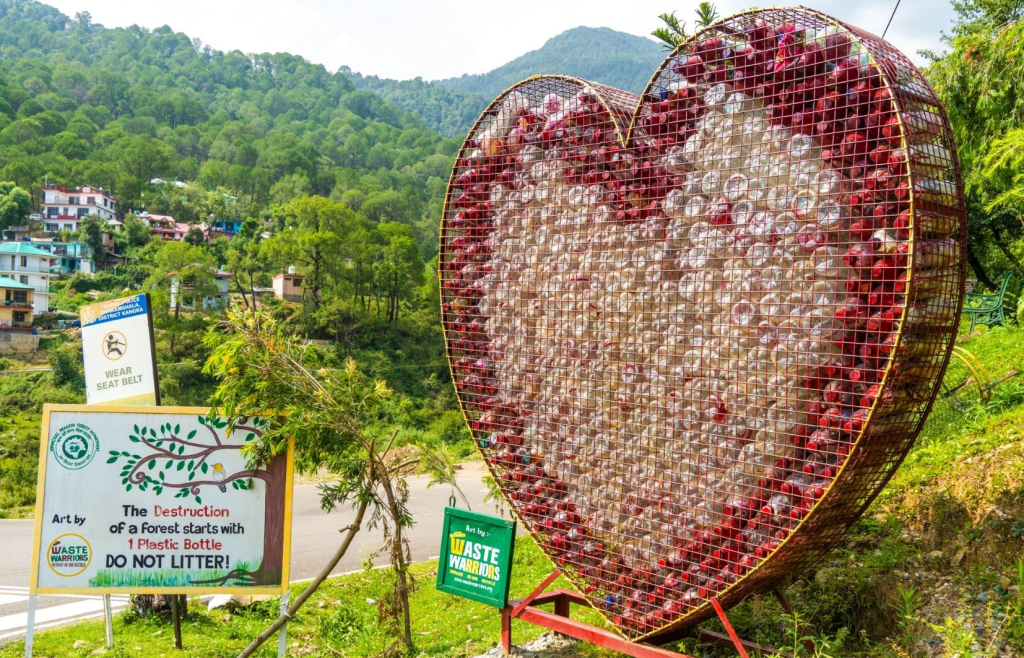
The single use plastic bottles are one of most littered products in the Himalayan Region. An art installation in Dharamshala made out of littered plastic bottles.
- Avoid Single-Use Plastics
Plastic items used for minutes can take centuries to break down. Carry reusable bottles and bags to reduce waste and protect the environment.
- Use Water Wisely
Tourists use more water than locals. Skip daily towel and sheet changes in hotels to help conserve millions of litres of water.
- Buy Local
Support local businesses, reduce carbon footprints, and enjoy fresh, local food.
- Choose Ethical Tours
Pick tour operators who respect the environment, use resources wisely, and support local culture.
- Share Rides
Use more public transport, shared cabs, or bikes to cut down on carbon emissions.
- Visit National Parks
Explore nature while supporting conservation efforts that protect wildlife and habitats.
- Leave No Trace
Dispose of waste properly and avoid disturbing nature and littering in public spaces. If infrastructure is lacking, carry back your waste with yourself.
- Spread the Word
Encourage others to travel sustainably and protect the environment. Inform fellow travellers, friends and family about how sustainable tourism helps all of us by safeguarding our beautiful environment.
Understand better about climate change in India and read about how Waste Warriors promotes and practices sustainable travel here.

Diya Batra
Sr. Associate, Communications